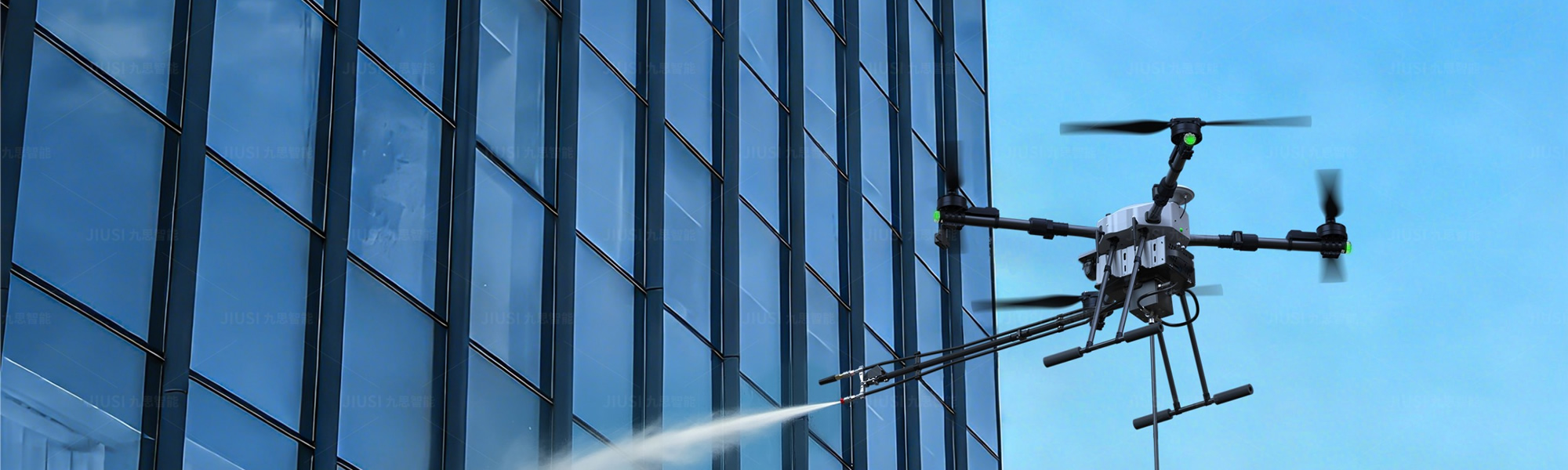
Safe flight
What services can we provide for you?
Please rest assured that we will answer and handle your question as soon as possible.
Flight Safety Summary
Flight Environment
a. Flight operations must be conducted in open areas away from population, as tall reinforced concrete buildings may interfere with the compass and GPS signals on the aircraft;
b. Flight operations must be conducted in areas below 4000 meters in altitude;
c. The operating temperature should be maintained between 0℃ and 40℃, and the operating humidity between 10% and 90%.
d. Do not fly in adverse weather conditions, such as strong winds (wind speed of 8 m/s or above), heavy rain (rainfall of 25 mm or more in 12 hours), snow, or fog and haze.
e. During normal operations, the flight altitude must be controlled below 120 meters, and local laws and regulations must be strictly observed;
f. To prevent interference between the remote controller and other wireless devices, be sure to turn off other wireless devices on the same frequency band before using the aircraft remote controller;
i. Flying near sources of electromagnetic interference is prohibited (sources of electromagnetic interference include, but are not limited to, high-voltage power lines, high-voltage power transmission stations, mobile phone base stations, and television broadcasting signal towers, etc.). If the interference source is too strong, the aircraft will not be able to fly normally.
Pre-flight checks
a. Ensure that the remote control and aircraft batteries are fully charged, and that the aircraft batteries are properly installed and locked.
b. Ensure that the propeller is securely installed and free from damage or deformation, that the motor and propeller are clean and free of foreign objects, that the propeller and boom are fully extended, and that the boom sleeve is tightened.
c. Ensure the remote control antenna is deployed.
d. Place the aircraft in a flat, open outdoor area, ensuring there are no obstacles, buildings, trees, etc. in the vicinity. The pilot should be 5 meters away from the aircraft and facing the tail.
e. Enter the handheld ground station flight interface and check the relevant parameters of the aircraft according to the "Pre-flight Check" list.
f. If multiple aircraft are operating simultaneously, please demarcate airspace to avoid mid-air collisions and serious safety accidents.
During flight
a. Maintain a distance of 26 feet (8 meters) from the aircraft during takeoff and landing.
b. Always maintain visual contact with the aircraft. JIUSI drones limit the distance you can move the drone away from the controller to ensure you maintain proper control.
c. As required by the FAA, do not attempt to fly your drone above 400 feet.
d. Place your hand on the flight controls to ensure the flight is under control.
e. Do not fly under the influence of alcohol or drugs. f. Respect the space and privacy of others.
Laws and policies
Drone users are advised to consult local regulations before flying and to conduct flight missions only in a legal and safe manner. Jiusi Intelligent provides a compilation of regulations from various countries for your reference. As drone-related laws and regulations in different countries are updated from time to time, please refer to local policies for the most accurate and up-to-date information.
No-fly zone search
Product Catalog Download
D15R Intelligent Cleaning Solution ( Chinese / English )
D50R Photovoltaic Panel Cleaning Solution ( Chinese / English )
D10R Integrated Cleaning Solution ( Chinese / English )
Water pump WP03 & electrical appliance JS3600 ( Chinese / English )
Drone-specific cleaning agent
-Powerful Cleaning Detergent JS001 ( Chinese / English )
- JS002 Super-Efficient Cleaner ( Chinese / English )
- Environmentally friendly cleaning agent JS012 ( Chinese / English )
Contact number: +86 18926056425
Email address: business@jsirobot.com
Company Address: Room 3204, Qiancheng Commercial Center, No. 5 Haicheng Road, Mabu Community, Xixiang Street, Bao'an District, Shenzhen, Guangdong Province
Join the JIUSI Smart Community to stay updated on events, news, announcements, and sales information.





Join the JIUSI community to stay updated on events,
News, announcements and sales information


 中文
中文




 Overseas: +86 18926056425 China: 18928421161
  business@jsirobot.com